Local search plays a central role in how consumers make decisions. People look for nearby restaurants, repair services, medical offices, gyms, and more. When that information is accurate, businesses gain trust and visibility.
The problem is that collecting reliable details manually takes an enormous amount of time. Copying addresses, phone numbers, websites, ratings, and reviews into spreadsheets invites errors. Many organizations simply give up or rely on incomplete information.
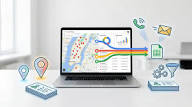
A Google Maps Scraper helps teams access structured data from local listings in a simple and consistent way. Instead of searching one business at a time, marketers and analysts can pull hundreds or thousands of listings in organized format.
This shift opens new opportunities for research, planning, and outreach.
How a Google Maps Scraper Works
A Google Maps Scraper automates the extraction of information from Google Maps listings. These tools can gather:
Business names
Addresses
Phone numbers
Websites
Categories
Ratings and reviews
Once collected, the data is organized into tables that can be sorted or filtered. This allows teams to perform fast comparisons across regions or industries.
With local business data extraction, the process becomes repeatable and scalable. Instead of relying on manual copying, organizations gain structured datasets they can analyze with confidence.
Benefits for Marketing Teams
Marketing professionals depend on accurate data to run campaigns. A business listings scraper helps them research competitors, validate markets, and identify outreach opportunities.
For example, a team can gather every listing in a specific city, filter by category, and review average ratings. From there, they might:
Highlight businesses that need stronger online presence
Identify new service gaps
Contact owners about marketing opportunities
Because the information is organized, it becomes easier to create targeted strategies. Data informs decisions rather than guesswork.
Better Local SEO Decisions
Local search performance depends heavily on listing consistency. Missing phone numbers, wrong addresses, or broken website links can hurt rankings.
Through local SEO data collection, agencies can scan multiple listings at once, identify inconsistencies, and recommend improvements.
A scraper helps reveal patterns such as:
Duplicate business entries
Unverified listings
Categories that do not match services
Low review activity
Correcting these issues supports credibility and increases visibility in local search results. Businesses appear more trustworthy, and customers feel confident contacting them.
Lead Generation Possibilities
Sales teams also benefit from structured data. Using lead generation from Google Maps, they can locate businesses that match certain criteria and reach out with relevant solutions.
For instance, a software company might search for medical clinics in a specific city, gather contact details, and personalize outreach messages.
Because the dataset comes from actual listings, communication feels genuine rather than random. This approach increases the likelihood of positive responses and long-term relationships.
Google Maps Data Mining for Research Projects
Researchers and analysts often need regional datasets. Universities, consultants, and business analysts study markets, consumer behavior, and urban growth.
Google Maps data mining allows them to collect information in bulk, organize it, and apply statistical methods later. They can compare neighborhoods, track business density, and observe changes over time.
These insights help communities plan better services and understand local economic patterns.
Saving Time and Reducing Errors
Manual research consumes countless hours. Copying data from listing to spreadsheet increases the risk of typos and missed entries.
A Google Maps Scraper turns this repetitive work into an automated process. Teams gain:
Faster research cycles
Consistent formats
Clean datasets ready for analysis
Time saved can then be spent on strategy, outreach, and client service rather than tedious manual tasks.
Responsible Use of Scraped Data
Even though listing information is publicly available, it should always be used thoughtfully. Outreach must be respectful, relevant, and valuable.
Companies should avoid sending generic mass emails or calling businesses excessively. When communication is targeted and helpful, relationships grow naturally.
Data is powerful, but only when used with professionalism and care.
Choosing the Right Google Maps Scraper
Not every scraper offers the same features. When evaluating options, consider whether the tool can:
Handle large datasets
Export clean spreadsheets
Filter listings by category or region
Support regular updates
Many organizations find value using Scraper City because it provides reliable local business data extraction without complicated setup. Mentioning it once here fits the requirement of offering a practical recommendation.
SEO Advantages from Structured Local Data
A Google Maps Scraper contributes to better SEO performance because it helps identify listing gaps, outdated details, and competitive insights.
With accurate information, businesses can correct inconsistencies across platforms. They can also build content strategies around real locations, services, and customer interests.
Using secondary keywords naturally within articles, landing pages, and case studies signals relevance to search engines. Terms such as Google Maps data mining and business listings scraper strengthen topical authority.
Practical Ways Agencies Apply Scraped Data
Agencies frequently manage multiple clients at once. By organizing local listing data, they can:
Prioritize local outreach campaigns
Plan review-building strategies
Compare competitor strengths
Track progress across regions
Structured datasets make reporting easier. Clients appreciate seeing tangible information rather than assumptions.
Final Thoughts
A Google Maps Scraper brings clarity to local research. Instead of scattered information, teams gain organized insights that support marketing, SEO, research, and outreach.
Whether used by agencies, consultants, analysts, or sales teams, this tool removes the friction of manual data collection. Businesses benefit from accurate listings, better decision-making, and stronger local presence.
With responsible use and consistent organization, a Google Maps Scraper becomes a valuable resource for anyone who depends on local data.