The bumbu babah menu brings together rich Indonesian and Peranakan tastes in a way that feels warm, traditional, and unique. This style of cooking highlights bold spices, creamy sauces, and comforting meals that many people enjoy. Even though every restaurant prepares things differently, the base flavors stay the same. Therefore, learning about this menu helps people understand what makes it so special.
The dishes in the menu usually combine local herbs with Chinese-influenced cooking methods. This blend creates meals that feel both familiar and exciting. Each dish focuses on taste, texture, and aroma to give diners a strong food experience. Because of these features, the menu continues to grow in popularity.
What Makes the Bumbu Babah Menu Unique
The bumbu babah menu stands out because it uses a spice paste that blends garlic, shallots, ginger, turmeric, and chilies. These ingredients work together to create a smooth and flavorful base for many dishes. As a result, the meals taste rich even when the recipes are simple.
Another reason this menu feels unique is the use of coconut milk and lemongrass. Since these ingredients add sweetness and freshness, the meals become well-balanced. This balance makes the dishes suitable for families, kids, and adults. Even people who do not like spicy food can enjoy it because the heat level can be adjusted.
History Behind the Bumbu Babah Cooking Style
The style behind the bumbu babah comes from a mix of Indonesian and Chinese cultures. Long ago, Peranakan communities brought their own flavors and cooking methods into local kitchens. This mix created new recipes that combined sweetness, spice, and savory tones.
Over time, families passed these recipes from one generation to the next. Each family changed the flavors slightly based on their region. Because of these changes, many versions of the dishes exist today. Still, the core spice blend remains the heart of every meal.
Detailed Menu
| Menu Item | Description | Price (IDR) |
|---|---|---|
| Ayam Bumbu Babah | Chicken cooked in Babah spice paste and coconut | 48,000 |
| Ayam Goreng Babah | Crispy fried chicken with Babah-style seasoning | 45,000 |
| Ikan Kuah Kunyit | Fish in turmeric broth with lemongrass | 52,000 |
| Ikan Bumbu Rica | Spicy fish cooked with chilies and herbs | 55,000 |
| Udang Sambal Petai | Shrimp with spicy sambal and petai beans | 62,000 |
| Udang Bumbu Babah | Shrimp cooked in creamy Babah spice sauce | 60,000 |
| Sayur Lodeh Babah | Vegetables in creamy coconut broth | 30,000 |
| Tumis Kangkung | Stir-fried water spinach with garlic | 22,000 |
| Mie Goreng Babah | Fried noodles with chicken and Babah spices | 40,000 |
| Laksa Peranakan | Curry noodle soup with tofu, shrimp, egg | 45,000 |
| Lumpia Babah | Peranakan spring rolls filled with vegetables | 18,000 |
| Perkedel Jagung | Crispy corn fritters | 15,000 |
| Tahu Cabe Garam | Fried tofu with chili-salt seasoning | 20,000 |
| Nasi Campur Babah | Rice with chicken, egg, tempeh, sambal | 38,000 |
| Es Cendol | Iced dessert with pandan jelly and coconut milk | 15,000 |
| Es Lemon Serai | Fresh lemon drink with lemongrass | Rice with chicken, egg, tempeh, and sambal |
Common Ingredients
Most dishes on the menu use ingredients that are easy to find in Indonesian markets. These include garlic, shallots, turmeric, and coriander. Together, they create a smooth base that chefs use for chicken, fish, shrimp, and vegetables.
Coconut milk is another important ingredient because it makes the sauce creamy. Chili peppers add heat, while palm sugar gives a gentle sweetness. With these simple items, cooks can create many tasty meals. Even beginners can prepare these dishes with a little practice.
Popular Dishes
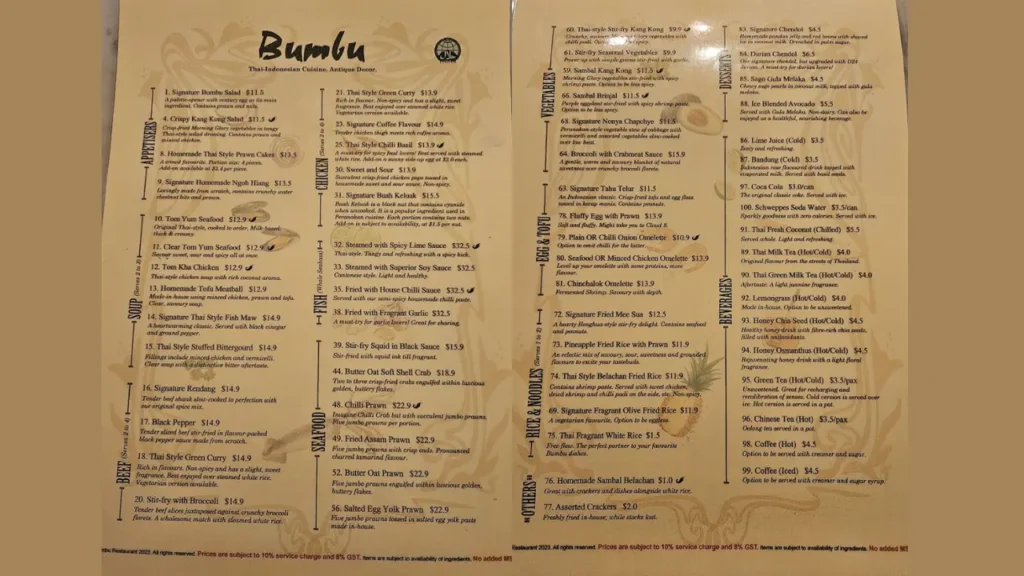
Many restaurants include familiar items in their bumbu babah menu, so diners know what to expect. Chicken dishes are usually the most common because they work well with a thick spice paste. Fish and shrimp dishes also appear often because seafood absorbs flavor easily.
Vegetable dishes like lodeh and stir-fried greens add balance to the meal. These lighter dishes help reduce the richness of coconut-based recipes. This balance makes the entire dining experience enjoyable and complete. Many people order a mix of meat, seafood, and vegetables.
Flavor Profile
The flavors in the menu feel bold but comforting. Most meals taste savory because of garlic and shallots. Meanwhile, turmeric and ginger add warmth, which helps create a full flavor experience. When coconut milk is added, the texture becomes creamy and smooth.
Some dishes taste slightly sweet because of palm sugar. Others taste fresh because of lemongrass and lime leaves. These contrasting notes help keep the meals interesting. Even younger diners enjoy the flavors because they are not too strong or overwhelming.
Health Aspects
The menu contains many natural ingredients that support good health. Garlic and ginger help the body fight sickness, while turmeric supports digestion. Because these spices appear in almost all dishes, diners benefit from them regularly.
People who need protein can enjoy chicken or fish dishes. Those who want more fiber can choose vegetable-based meals. Since coconut milk is rich, it should be eaten in moderation. Still, the menu offers enough variety for different diets and lifestyles.
Modern Versions
Today, many restaurants update their bumbu babah menu to attract younger diners. Some places add fried noodles or grilled chicken with the same spice paste. Others create fusion dishes that mix Peranakan flavors with modern cooking styles. As a result, the menu continues to evolve.
Even though new dishes appear, the traditional flavors remain strong. Chefs still rely on the original spice blend to honor cultural roots. This blend keeps the identity of the cuisine alive while allowing creativity. Because of this balance, more people appreciate the menu.
Dining Experience
Ordering from the bumbu babah usually means enjoying a warm and comforting meal. The dishes often come with rice, vegetables, or sambal. This combination makes the plate complete and filling. Many diners enjoy sharing these meals with family or friends.
The smell of the spices makes the dining experience more exciting. The thick sauces and colorful dishes also look appealing. As people enjoy their meal, they appreciate the smooth, rich flavors. This experience makes diners return again and again.
Locations & Operating Hours
| Outlet / Location | Area / City / Mall | Typical Operating Hours* |
|---|---|---|
| Bumbu Babah @ Plaza Shah Alam | Plaza Shah Alam, Shah Alam, Selangor | ≈ 11:00 AM – 10:00 PM |
| Bumbu Babah @ The Sphere, Bangsar South | Bangsar South, Kuala Lumpur | ≈ 11:00 AM – 10:00 PM |
| Bumbu Babah @ Central i-City Mall | i-City, Shah Alam / Klang Valley | Likely mall hours (~10:00 AM – 10:00 PM) |
| Bumbu Babah @ MyTown Cheras | Cheras, Kuala Lumpur | Typical mall-restaurant hours |
| Bumbu Babah @ Putrajaya (IOI City Mall / Kota Warisan / Menara Perkeso) | Putrajaya / Sepang region | Typical mall-restaurant hours |
Conclusion
The bumbu babah menu offers a flavorful mix of Peranakan and Indonesian cooking traditions. Its dishes use fresh herbs, bold spices, and creamy sauces that appeal to many people. With simple ingredients and rich tastes, the menu continues to grow in popularity. Anyone who enjoys comforting meals will appreciate the variety and flavor of this cuisine.